323 Lester Road, Apopka, Florida 32712, United States

Ruby came to the Avian Reconditioning Center in 2016 after she was found on the side of the road. Ruby sustained a fracture to the metacarpal in her right wing. After some time in rehabilitation, it was determined that Ruby could no longer fly well enough to survive in the wild. Ruby has become a falconry bird for the center and you can see her flying on Saturday and at our festivals.

Sienna came to ARC in May of 2018 as a rehab bird. She had either fallen from or was knocked out of her nest by a sibling. She was found on the ground emaciated and brought to ARC. Upon examination, Sienna had a mild infection in her right eye and the eyeball had started to collapse causing her to be non-releasable. Sienna was transferred to another center in 2018 but when that center down-sized Sienna found her way back to ARC.

When Archer and her three siblings where just a few weeks old, their nest tree was cut down, and they were all thrown to the ground. They were brought to the Avian Reconditioning Center for help, and while her brothers and sisters were fine, Archer suffered trauma from the fall, and did not have full function in her legs. Archer cannot be released back into the wild, since her injuries would keep her from hunting the way a hawk needs to in order to survive. Archer can be seen at Avian Reconditioning Center doing flight demonstrations on Saturdays.
Amelia injured her left eye when she fell from her nest as a fledgling. The injury was very serious and the eye eventually collapsed resulting in blindness. She was a very fast learner to get on the glove and is a wonderful Educational Ambassador. You can see her on Saturday and at our festivals.
Sable came to the Avian Reconditioning Center after being shot with a pellet gun. Initially, it was hoped that she would heal enough to regain the full use of her wing, and be able to be released back into the wild. Unfortunately, the strain of flight proved to be too much for Sable. Since she was not strong enough to be returned to the wild, Sable has a home here at the Avian Reconditioning Center.
Jaega was transferred to ARC in the spring of 2022 as a fledgling. He had been found tangled in barbed wire and lost part of his right wing as a result of the injury. Although Jaega cannot fly, he enjoys spreading his wings in the breeze and is a master at “virtual soaring” while sitting atop his perch.
Briar was admitted to ARC in the spring of 2023 as a juvenile with a fractured metacarpal (wrist) of her right wing. This injury severely limited her flight ability making her non-releasable so she found a permanent home here at ARC.
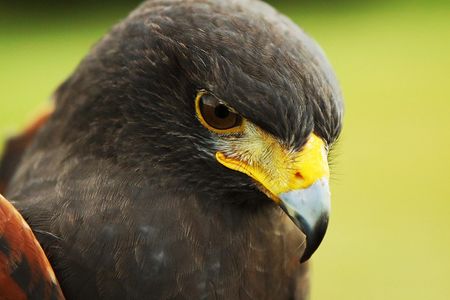
Harris's hawks are a desert bird, and have long skinny scaled legs, perfect for perching on cacti while looking for prey. Their pack hunting methods come in handy in the desert, where a pack of five hawks can more easily take down prey, and sometimes catch larger prey as well.
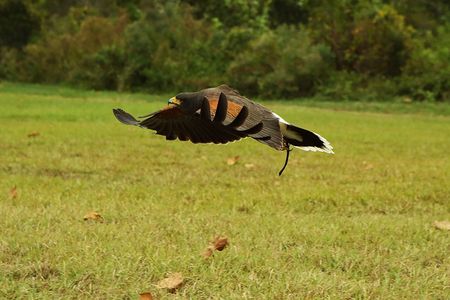
Astro and Dino are at the Avian Reconditioning Center as falconry birds, and enjoy flying together in a cast. Astro is the more senior bird, and treats Dino much like a younger sibling. They often fly in the afternoon at ARC, after the other birds are safely put away.

Your donation helps ARC continue to rehabilitate and educate about birds of prey. Without your support, we would not be able to help birds of prey when they need our help the most!